
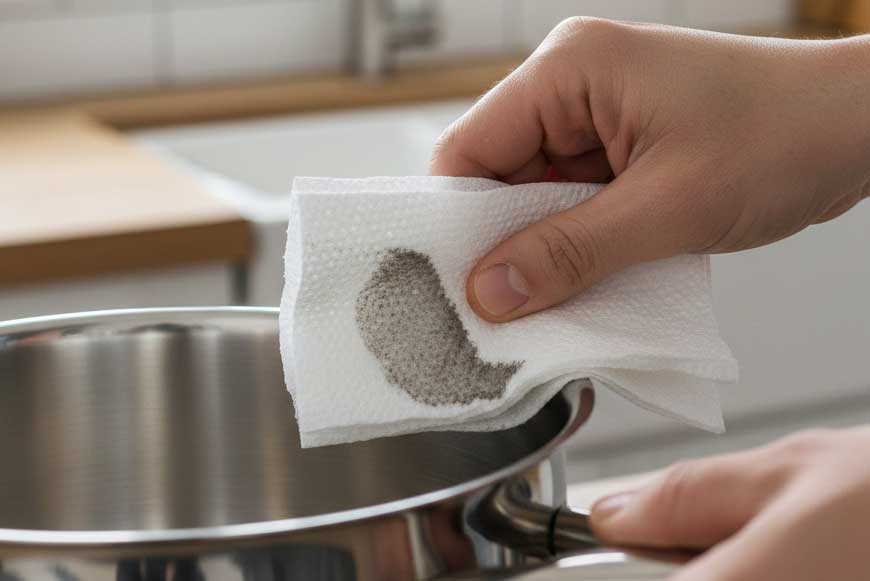
Why Wiping New Stainless Steel Leaves Black Residue
You just bought a brand-new stainless steel pot or appliance. It looks shiny and clean, but when you run a paper towel over it, the towel turns black or grey. Don’t panic—your product isn’t defective, and it isn’t rust.
Here is why that black residue appears and how to remove it properly.
1. Polishing Compounds and Mechanical Oils The primary reason for greasy, dark residue is the manufacturing process. To give stainless steel that brilliant, mirror-like finish, manufacturers use mechanical polishing wheels.
These wheels use abrasive polishing compounds (often made of waxes and oils) to buff the metal. While the factory cleans the product afterward, microscopic residue often remains trapped in the steel’s “grain” or surface pores.
2. Fine Metal Dust The black substance is often a mixture of the polishing oil and ultra-fine metal dust produced during the buffing process. Because the particles are so small, they appear as a dark grey or black smudge rather than shiny metal shavings.
How to Remove the Residue Regular water won’t work because the residue is oil-based. Follow these steps to deep clean your new stainless steel:
Dish Soap & Hot Water: Use a grease-cutting dish soap and very hot water. Scrub efficiently with a sponge.
Baking Soda Paste: For stubborn residue, mix baking soda with a little water to create a paste. The gentle abrasiveness helps lift the metal dust from the surface.
The Oil Method: Surprisingly, using a little olive oil on a paper towel can help dissolve the manufacturing oil. Wipe it down, then wash thoroughly with soap to remove the excess oil.
Once the paper towel comes away clean, your stainless steel is safe to use!




Thank you for sharing this! I really enjoyed reading your perspective.