Chemical and Electrochemical Surface Treatments for Stainless Steel Kitchenware
Beyond physical polishing, chemical and electrochemical treatments fundamentally alter stainless steel at a molecular level, endowing it with superior corrosion resistance and hygienic properties.
1. Electropolishing
Principle: Kitchenware is submerged in a specific electrolyte solution and subjected to an electric current. This “electrolytic decontamination” process preferentially dissolves microscopic surface protrusions.
Advantages:
Ultimate Hygiene: Eliminates microscopic pores, leaving no hiding spots for bacteria and grime, making it a standard for medical-grade and professional lab equipment.
Lasting Luster: Compared to mechanical polishing, it forms a more uniform and dense oxide film, significantly boosting rust resistance.
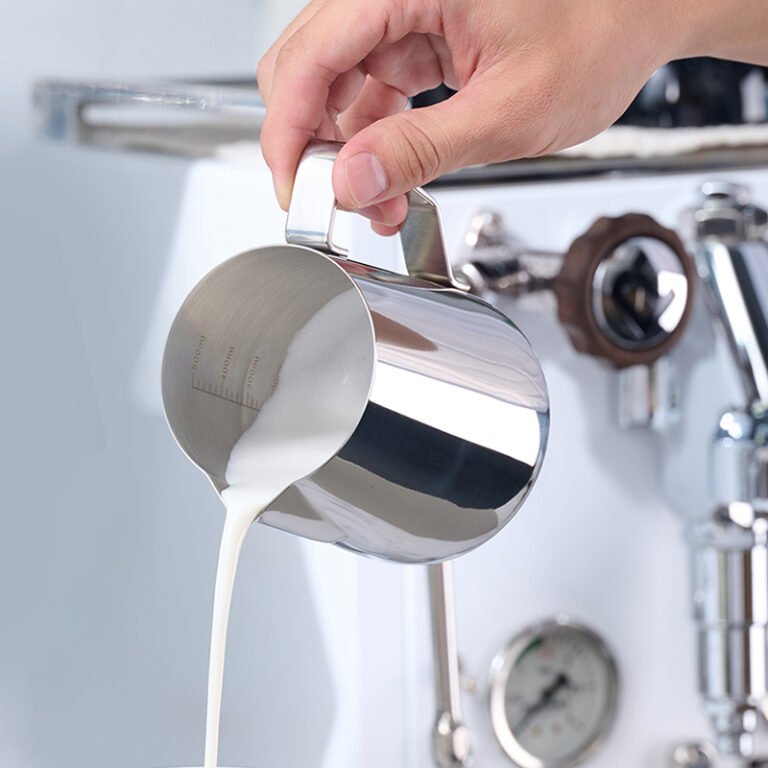
Applications: Strainers, precision measuring cups, interiors of high-end cookware.
2. Pickling & Passivation
Principle: Acidic solutions are used to remove surface scale (e.g., black marks from welding), followed by an oxidizer that induces the formation of a transparent, robust chromium-rich passive film on the surface.
Advantages:
Restores Rust Resistance: The passive layer is key to stainless steel’s corrosion resistance. After manufacturing damage, passivation rebuilds this protective “shield.”
Uniform Appearance: Eliminates processing marks, ensuring the entire product displays a consistent metallic color.
Applications: Integrated stainless steel sinks, large kitchen appliances, industrial stockpots.
Comparison Summary
| Treatment Method | Primary Goal | Visual Appearance | Hygiene Level |
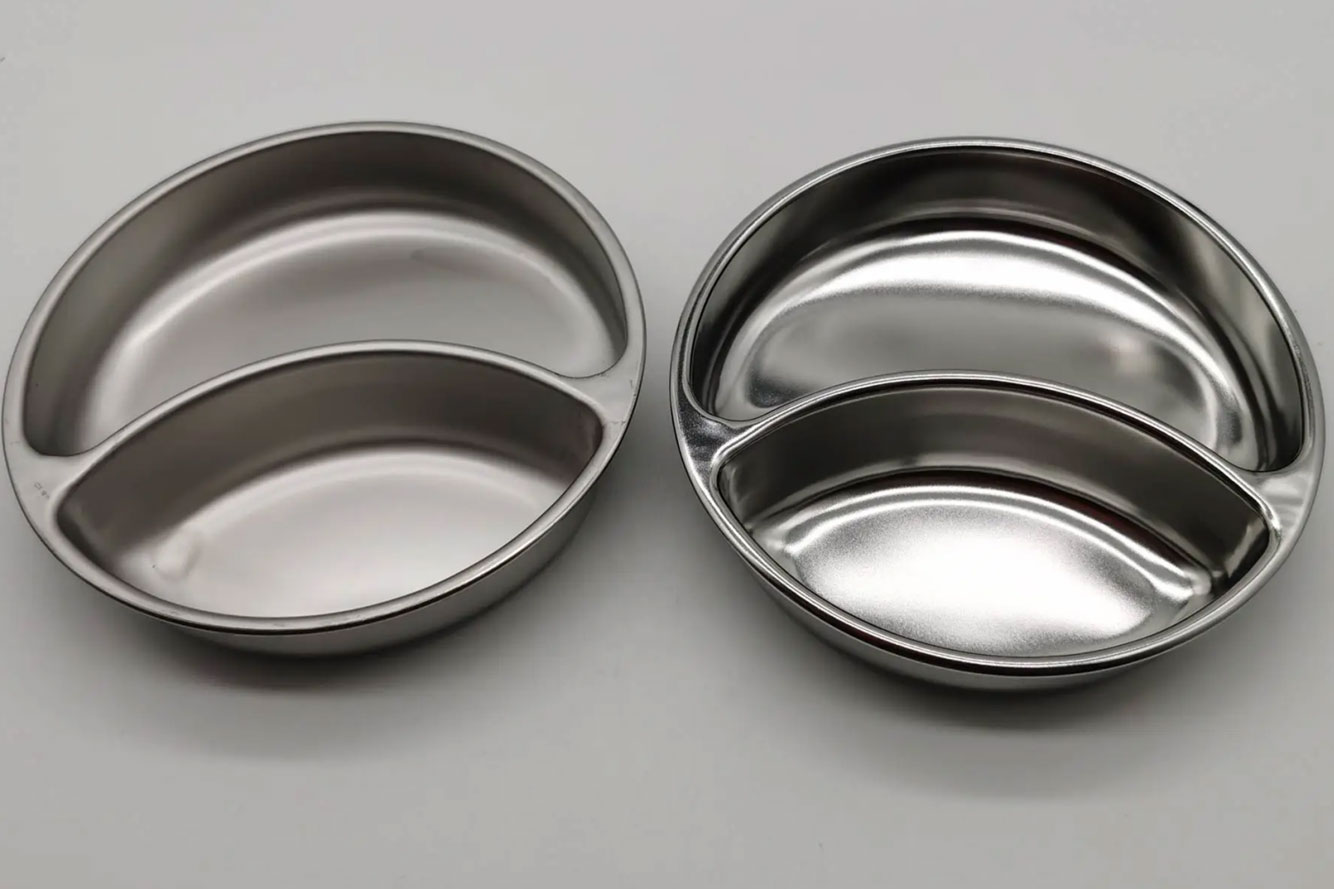
| Electropolishing | Remove microscopic roughness | Extremely bright, mirror-like | ⭐⭐⭐⭐⭐ |
| Pickling & Passivation | Enhance oxidation resistance | Natural metallic color | ⭐⭐⭐⭐ |